

Royal Crusaders

Настоящее имя: Royal Crusaders
Об исполнителе:
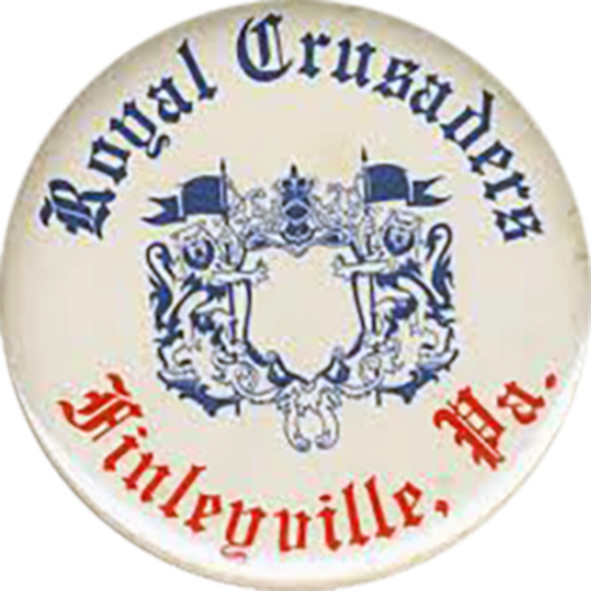
The Royal Crusaders was a competitive junior drum and bugle corps based in Finleyville, Pennsylvania and, later, Clairton, Pennsylvania, and represented the Pittsburgh metropolitan area. The corps competed in Drum Corps International and was a Top-12 Finalist in 1975. Their uniforms consisted of red, white and blue Cadet-style jackets, white slacks with a red stripe, and a blue hat with a white plume. The corps disbanded in the early 1980s. Formation The Royal Crusaders began in 1969 as a local corps from Finleyville, a small town in southwestern Pennsylvania. Later, in the 1970s, the corps purchased a corps hall in Clairton, Pennsylvania, a nearby industrial town and changed the name to "Pittsburgh" Royal Crusaders. Nevertheless, the corps most often was referred to as "Finleyville." 1970s The corps scored well in DCI competitions where they were generally associate members, placing in the top 25 for eight straight years from 1972-80. The Royal Crusaders' best year was in 1975 when they placed ninth in DCI competition and made the finals. 1980s and disbandment Although the Royal Crusaders had success in competitions, they were in serious financial trouble by the late 1970s. The corps collapsed after the 1980 tour, due to a lack of solid financial support. The Board of Directors attempted to field a corps in 1981, but ceased their efforts, due to a low number of members (particularly in the horn line) and a lack of sufficient funding. This marked the end of the original version of the corps, which disbanded after the 1980 season. In 1982, a small group of younger members marched in local parades using the Royal Crusaders equipment, and were referred to as the Royal Crusader Cadets. Even this small effort, approximately the size of a modern-day mini-corps, folded after a year. By this time the Crusader's corps hall in Clairton was sold and the buses were disposed of. Musical style, innovations, and influence In their heyday, the Royal Crusader's most popular tune was "The Coronation of Boris Godunov." The Corps also played jazzy numbers and had a very crisp marching and maneuvering style. The Royal Crusaders were known for several drumline innovations. They were among the first drumlines to switch to a matched grip (as opposed to the traditional snare grip) in the mid-1970s. By the early 1980s, every significant drumline in the region, including the Vagabonds, the University of Pittsburgh drumline, and most local drum and baton corps, had followed the Royal Crusaders' example of using the matched snare grip. In addition to pioneering the matched snare grip, the Royal Crusaders, along with the Santa Clara Vanguard, pioneered the shift away from snare drum slings and began to use harnesses in the late 1970s. The snare harnesses were original designs featuring a clear plastic body plate that eliminated the need to wear the harness under the uniform. Technical and stylistic innovations aside, the corps also developed a strong drumline that produced two outstanding late 1970s tenor players, Brian Berry and Doug Jefferson. Other drummers who were influential in the Western Pennsylvania corps scene were Tom Milchek, Vince Schaeffer, Frank Miller, Scott Koter, and Mark Ortega (Blue Devils). Other members joined the Crossmen Drum & Bugle Corps, Blue Devils, Santa Clara Vanguard, North Star Drum And Bugle Corps, General Butler Vagabonds, Steel City Ambassadors, and other corps. Former horn-line member Jeff Danchek bacame President of the Mon Valley Express. Many other members of the Royal Crusader family remain active in marching circles in Western Pennsylvania twenty years after the corps' demise. The corps was the highest-scoring, and largest, drum corps from western Pennsylvania to ever compete in Drum Corps International. Along with the General Butler Vagabonds, Cambria Cadets, and other corps, the Royal Crusaders showed Western Pennsylvania to be a thriving mecca of drum corps in their heyday in the mid-1970s. The Royal Crusaders are said to have set a high standard of excellence for future corps. Guinness Book of World Records The Royal Crusaders made the Guinness Book of World Records in the early 1970s by marching 20 consecutive miles through the streets of Finleyville.